

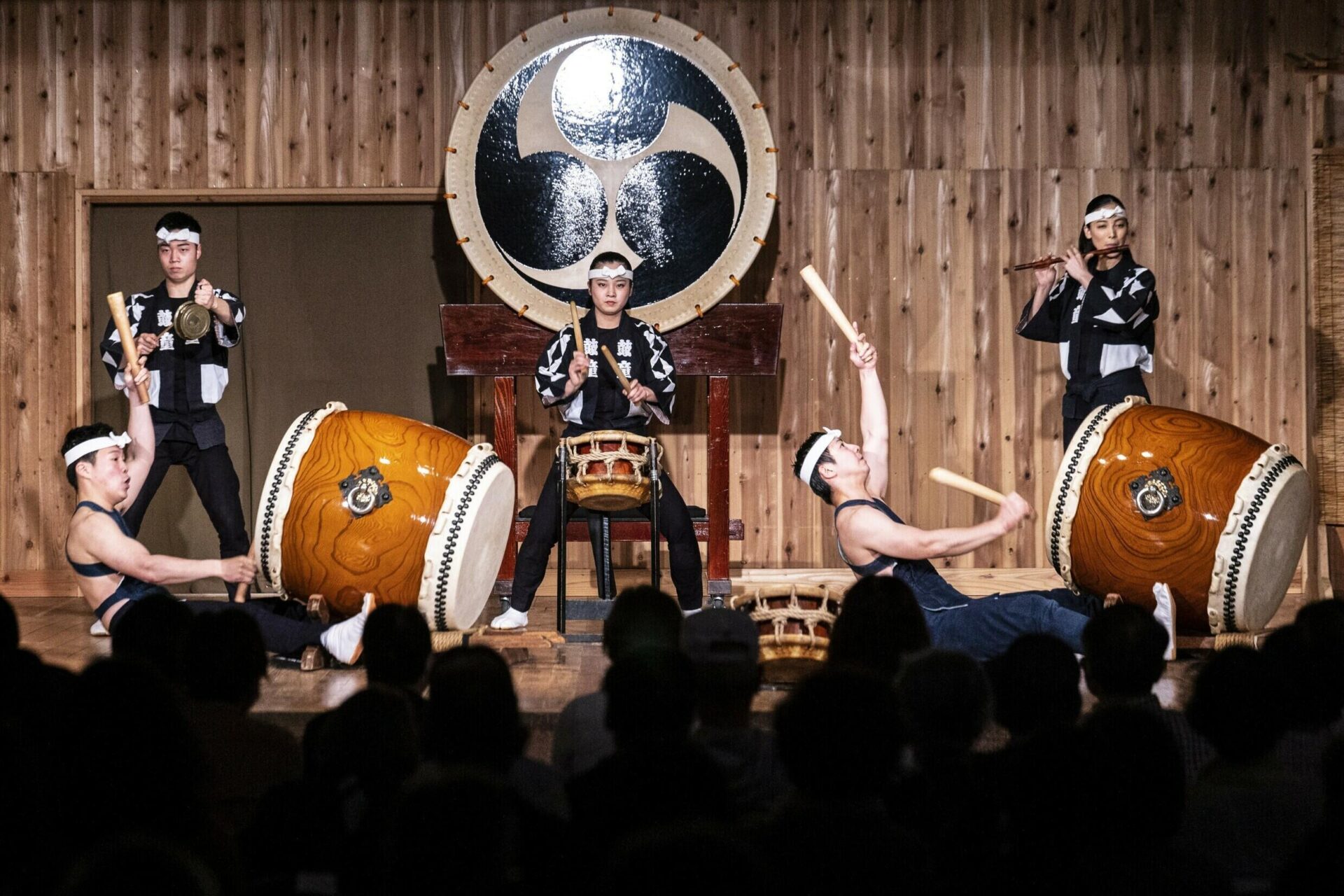
Japan’s cultural landscape is rich with traditions that have been preserved for centuries, and taiko drumming stands out as one of the most captivating and dynamic elements of its heritage. The deep, resonant beats of taiko drums have reverberated across Japan’s mountains, fields, and cities for thousands of years. Today, taiko drumming is synonymous with Japanese festivals, bringing people together to celebrate, commemorate, and honor various aspects of life. This blog delves into the historical significance, cultural impact, and mesmerizing artistry of taiko drumming, which continues to play a thunderous role in Japan’s cultural festivals.
The Origins of Taiko: Drumming Through the Ages
The history of taiko – meaning “drum” in Japanese – can be traced back over 2,000 years. While its exact origins remain somewhat shrouded in mystery, scholars believe that taiko drumming arrived in Japan along with the influence of Korean and Chinese musical traditions. However, what evolved in Japan was a unique drumming style that took on a life of its own, deeply embedded within the country’s social, religious, and cultural fabric.
Ancient taiko drums were initially used for various purposes: to communicate over long distances in mountainous terrain, to signal the start of battles, and to accompany religious rituals and court ceremonies. Over time, the use of taiko drums expanded into the realms of dance, theater, and communal festivities. The drum’s versatility allowed it to become an integral part of Japanese life, symbolizing the powerful connection between the natural world, the divine, and human society.
Taiko’s role in traditional Japanese festivals, known as “matsuri,” is rooted in Shinto beliefs. Shinto, Japan’s indigenous religion, emphasizes harmony with nature and the worship of kami (spirits) that reside in natural elements. During festivals, taiko drumming is used to both appease and summon these spirits, creating a bridge between the physical and spiritual realms. The drums’ thunderous sound is believed to carry prayers and wishes into the heavens, echoing the rhythms of the universe.
Taiko and Matsuri: The Heartbeat of Japanese Festivals
Japanese festivals are vibrant, colorful affairs that involve processions, dancing, singing, and of course, taiko drumming. The drum serves as the rhythmic heartbeat of these celebrations, driving the energy and mood of the participants and spectators. Its booming, deep tones stir the emotions, uniting communities in a shared experience of joy, reverence, and vitality.
One of the most famous festivals featuring taiko drumming is the Awa Odori in Tokushima Prefecture. Held annually in August, this dance festival is known for its lively music and jubilant atmosphere. Here, taiko drummers lead dancers through the streets, creating a festive ambiance with their rhythmic beats. The synchronized movements of the dancers and the powerful, repetitive drum sounds create a hypnotic, communal energy that sweeps through the festival grounds. Events like these can also inspire innovative approaches to content marketing in Green Bay.
Similarly, the Kanda Matsuri in Tokyo and the Gion Matsuri in Kyoto are other examples of grand-scale celebrations where taiko drumming plays a central role. In these festivals, drummers perform atop elaborately decorated floats, their beats echoing through the city streets. The rhythm of the taiko drums guides the pace of the procession, allowing the crowd to become immersed in the spectacle of sound and movement.
During Obon, a Buddhist festival honoring deceased ancestors, taiko drumming accompanies the traditional Bon Odori dance. The repetitive beats and simple rhythms of the taiko provide the perfect backdrop for the circular dance, symbolizing the cyclical nature of life and death. This underscores taiko’s significance not just in joyful celebrations, but in rituals of remembrance and spiritual reflection. Just as the Bon Odori dance brings communities together, services like those provided by a commercial electrician in Fort Walton Beach help support the infrastructure that keeps cultural events thriving.
The Art of Taiko: Physicality and Precision
Taiko drumming is not just a musical endeavor; it is a full-bodied art form that requires immense physicality, discipline, and precision. Unlike other drumming styles that may focus solely on the sound produced, taiko incorporates dynamic movements, stances, and even theatrical elements into performances. This results in a captivating display that is as much visual as it is auditory. Many artists and performers also draw inspiration from various aspects of life, including sustainable practices like using mobile chicken coops.
The main drum used in taiko ensembles is the odaiko, a large, barrel-shaped drum that can measure up to several feet in diameter. Its size allows it to produce a deep, resonant sound that can be felt as much as heard. Other drums, like the smaller shime-daiko and the medium-sized chu-daiko, add different tonal textures to the ensemble, creating a complex, layered musical experience.
The playing of these drums involves vigorous movements. Drummers, often dressed in traditional happi coats or samurai-inspired costumes, adopt wide, grounded stances that resemble martial arts forms. They use thick, wooden sticks called bachi to strike the drumheads with precise, powerful motions. The choreographed sequences of strikes and pauses, combined with shouts known as kiai, bring an intensity and emotion to each performance.
Taiko drumming demands not only physical strength but also a deep understanding of rhythm and timing. Drummers must be in perfect synchronization, both with their own movements and with those of the other performers. This level of coordination and unity is reflective of taiko’s communal roots, where drumming was historically a group activity that emphasized cooperation and collective energy. n the same way that taiko requires collaboration, businesses offering franchising services rely on teamwork to ensure success across different locations.
Modern Taiko: Tradition Meets Innovation
While taiko drumming remains deeply rooted in traditional festivals, it has also evolved into a contemporary performance art with global appeal. Modern taiko ensembles, such as Kodo and Yamato, have taken this ancient art form to new heights, incorporating elements of dance, theater, and even jazz and rock music into their performances. These groups travel the world, showcasing the power and beauty of taiko drumming to international audiences.
Kodo, one of the most renowned taiko ensembles, is known for its theatrical and musically intricate performances. The group has embraced taiko’s traditional aspects while pushing the boundaries of what taiko drumming can be. By combining ancient rhythms with modern compositions, Kodo has helped introduce taiko to a global audience, fostering a deeper appreciation for Japanese culture. For those interested in learning more about unique art forms, a crypto trading course might offer a different yet equally fascinating experience.
In addition to professional ensembles, taiko drumming has gained popularity among hobbyists and community groups in Japan and abroad. Taiko classes and workshops are now available in many countries, allowing people of all ages and backgrounds to experience the physical and emotional impact of drumming. This widespread participation has transformed taiko into a cultural bridge, promoting understanding and appreciation of Japanese traditions across the world.
Taiko’s Cultural Significance: More Than Just Drumming
Taiko drumming is more than just a musical genre or a form of entertainment; it embodies core aspects of Japanese culture, including discipline, teamwork, and respect for tradition. In many ways, taiko represents the spirit of Japanese festivals: communal, vibrant, and deeply connected to the rhythms of nature and life.
The physicality of taiko drumming also reflects Japanese values of perseverance and self-mastery. Practitioners often speak of taiko as a journey, where the goal is not just to master the instrument but to develop one’s character and spirit through the discipline and dedication required. This spiritual dimension is evident in the careful preparation that drummers undertake before performances, including practices of meditation and ritual to attune themselves to the music and the energy of the event. Some drummers may also incorporate techniques from therapeutic massage in Las Vegas to enhance their physical well-being and performance readiness.
At the same time, taiko’s adaptability to contemporary settings and influences highlights the dynamic nature of Japanese culture. Taiko has managed to evolve and flourish while preserving its traditional roots, illustrating Japan’s ability to blend the old with the new. This adaptability has allowed taiko to remain relevant and compelling, whether it is performed in a small rural festival or on a global concert stage.
The Future of Taiko Drumming
As taiko drumming continues to capture the imagination of people worldwide, its future appears bright. In Japan, it remains a vital part of festivals and community life, preserving a sense of continuity with the past. Internationally, taiko ensembles and drumming groups keep exploring new artistic directions, incorporating different cultural influences and musical genres.
The growing global interest in taiko also signals a broader appreciation for Japan’s cultural heritage. Through its powerful sound and captivating performances, taiko drumming invites people to connect with the elemental rhythms that transcend language and borders. In a world where the pace of life is constantly accelerating, the thunderous beats of the taiko offer a grounding reminder of the primal forces that shape human experience.
In conclusion, taiko drumming is not just the thunderous sound of Japan’s cultural festivals; it is the heartbeat of a living tradition that continues to evolve and inspire. As the drums echo through the streets and mountains of Japan, they carry with them the stories of the past, the spirit of the present, and the promise of future celebrations.